You still typeevery ticket and invoice by hand.AI automation for HVAC and plumbing shops, built on the software you run. Your office gets hours back, and you see which jobs pay.
Your crews are good at the trade. HAIBRID Consulting builds the systems that run the office work around it, on the platform and the books you already have.
Your office keeps pace with the trucks in the busiest week of July, and you steer the shop by its real numbers.
One job, start to finishFollow job 1047 from the first ring to the money in the bank.
It is a no-cooling call on a July afternoon. Five things have to happen before your shop is paid for it and knows what it made.
Example · Job 1047 · No cooling, 16-year-old system
The route of job 1047, drawn as one line through five stops: the desk phone and the dispatch board, the van and the customer's house, the invoice between the platform and the books and then the bank, the follow-up, and the job's cost sheet. At each stop what goes wrong today falls off the line: missed calls and a job that runs into the next, a capacitor left off the ticket, days stacking up before the invoice and the invoice aging to 90 days, a quote going cold, the costs that never reach the job. What we build closes each one: a call-back list and a flag on the board, the ticket read and completed, the invoice posted to both systems the same day with reminders that stop at paid, follow-ups on a clock, and every cost on the job with a note each morning.
Example · Job 1047
1The call comes in and goes on the board
The record
The call, the booking, the dispatch board.
Today
The person on your phones is on another call, or it is 6:40 in the evening, and the caller tries the next shop. The jobs that do book are right on the board at 7:00 and wrong by 10:00.
What we build
Every call, web form and text is logged the moment it arrives, with the customer’s address, equipment and last visit attached, and a missed call goes on a call-back list within minutes. An agent, AI software that picks its own next move inside limits you set, watches the board all day and tells your dispatcher early when a job is running into the next one.
We measure
Calls booked, out of calls received.
2The tech closes the job and the ticket comes back
The record
The ticket: hours, parts, photos, notes.
Today
The ticket comes back on paper, or half filled in on the app. The $60 capacitor from truck stock never makes it on, and someone in the office retypes the rest days later.
What we build
AI reads the ticket however it arrives, typed, handwritten or photographed in the driveway, and checks the hours and parts against the estimate and your pricebook. When something is missing, the tech gets a text while the job is still fresh.
We measure
Parts and hours billed, against parts and hours used.
Example
3The invoice goes out and the money comes in
The record
The invoice, in your platform, in QuickBooks, then in the bank.
Today
Back in the office, invoices wait for the Friday batch and get keyed a second time into QuickBooks. Collections happen when someone has a spare hour, and net 30 drifts to 60, then 90.
What we build
The invoice is built from the checked ticket the day the job closes and posts to your platform and your books at once. Reminders go out in your shop’s name on the days you choose and stop the moment the customer pays. An agent ranks what is still open by what is collectable and flags a commercial job before its lien deadline.
We measure
Days from job closed to invoice sent, and dollars more than 30 days past due.
Example
4The follow-up happens
The record
The open estimate, the review request, the maintenance plan.
Today
Your tech quoted a new system, nobody followed up, and the customer bought from whoever called back. The plan renews if someone remembers.
What we build
Every open estimate gets its follow-ups on schedule, biggest first, until the customer answers. The review request goes out the same day, and renewals are booked ahead of the season, so the slow weeks fill.
We measure
Estimates won, out of estimates given.
5You see what the job made
The record
The job’s cost and its margin.
Today
The revenue is in the system. The labor, the parts and the callback are not, so you learn which work paid at tax time, if at all.
What we build
Labor, materials, subs and callbacks land on the job before it closes. You see margin by job type, by tech and by lead source, and you can ask in plain words: which job types lost money in August? Each morning a short note tells you what closed, what is held, what came in, and which number is drifting.
We measure
Margin by job type.
That is one job. Your shop runs the same five hand-offs on every job, every day.
We build the chain as one system, from three of our services. Workflow Automation carries the reading, the checking, the chasing and the follow-up. Systems Integration keeps your phones, your platform and your books in step. Business Intelligence turns the job records into answers. You add trucks without adding office staff at the same pace, the cash arrives sooner, and you price with the margin in front of you.
Your numbersThe three numbers that cost a shop most.
Before we build, we count yours from your own phone records, your platform and your books.
1
Calls booked, out of every ten
Typical shop4 in 10
yours
Where ServiceTitan’s own customer data puts the typical shop. Its top 10% of shops by revenue book 62%.
ServiceTitan customer data
3
Owed on unpaid invoices
About$17,700
yours
Owed on average to small businesses with unpaid invoices. Nearly three in five (59%) have invoices more than 30 days overdue.
Intuit QuickBooks, 2026 late payments report
Office and admin pay, owner included, share of revenue
Healthy shop8 to 12%
yours
Office and admin pay in a healthy residential company doing $3M to $20M a year, which runs one office person for every five or six techs.
By tradeEvery trade has paperwork of its own. We build for that too.
HVAC
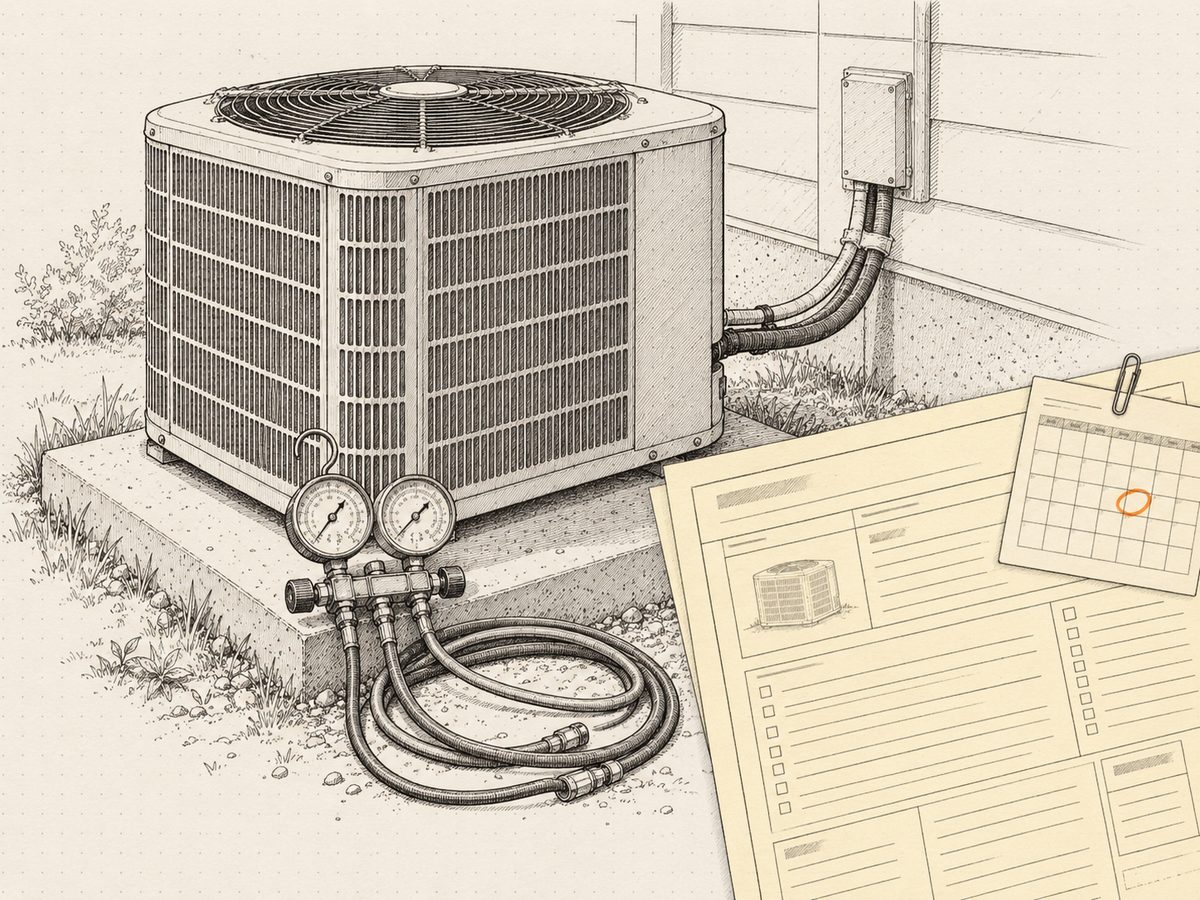
Maintenance agreements renewed and tune-ups booked before the season turns. Replacement quotes built from the equipment on file and followed until they close. Warranty registrations filed the day the install is finished. Refrigerant use logged straight from the ticket.
Plumbing
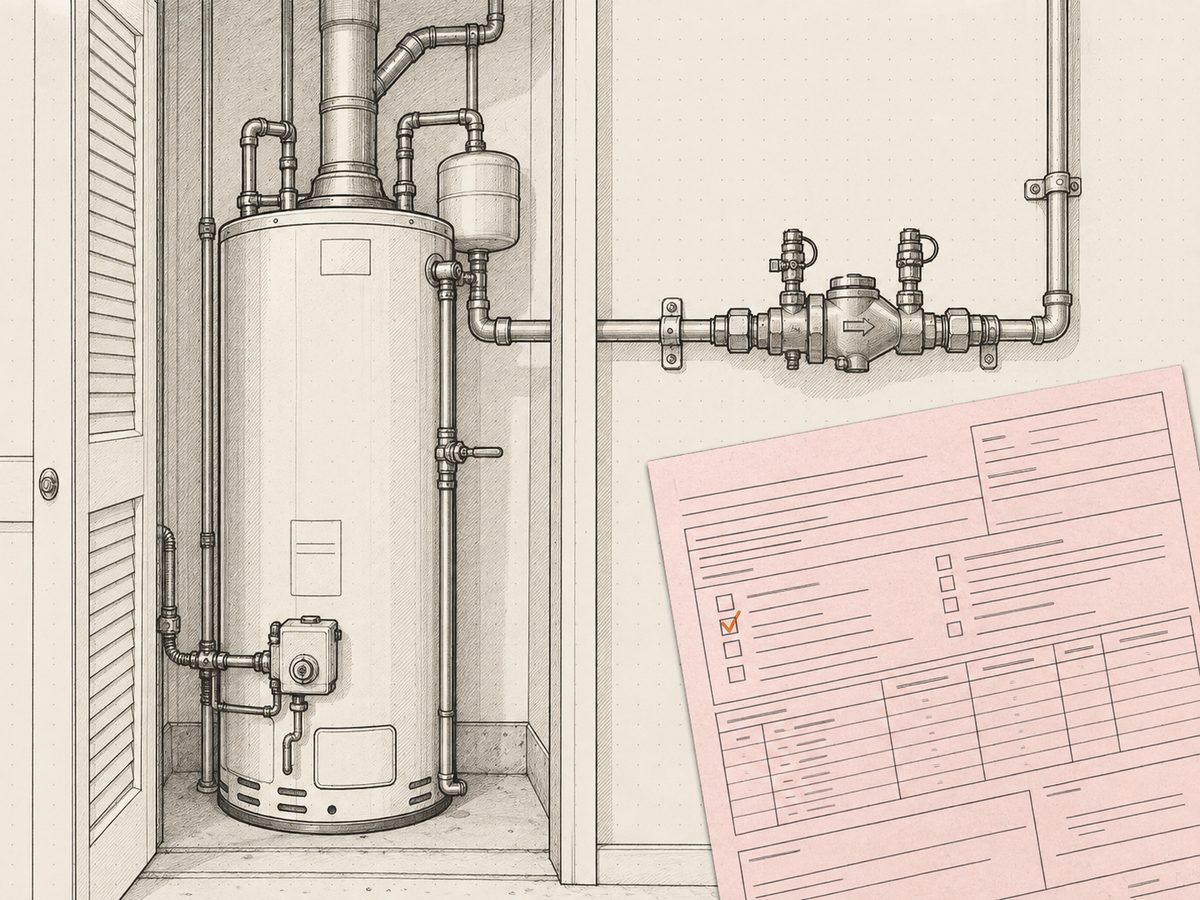
After-hours calls logged and on the on-call tech’s phone with the address and the history. Truck stock counted off the tickets, so the reorder list writes itself. Backflow test reports filled in and filed on time.
Electrical
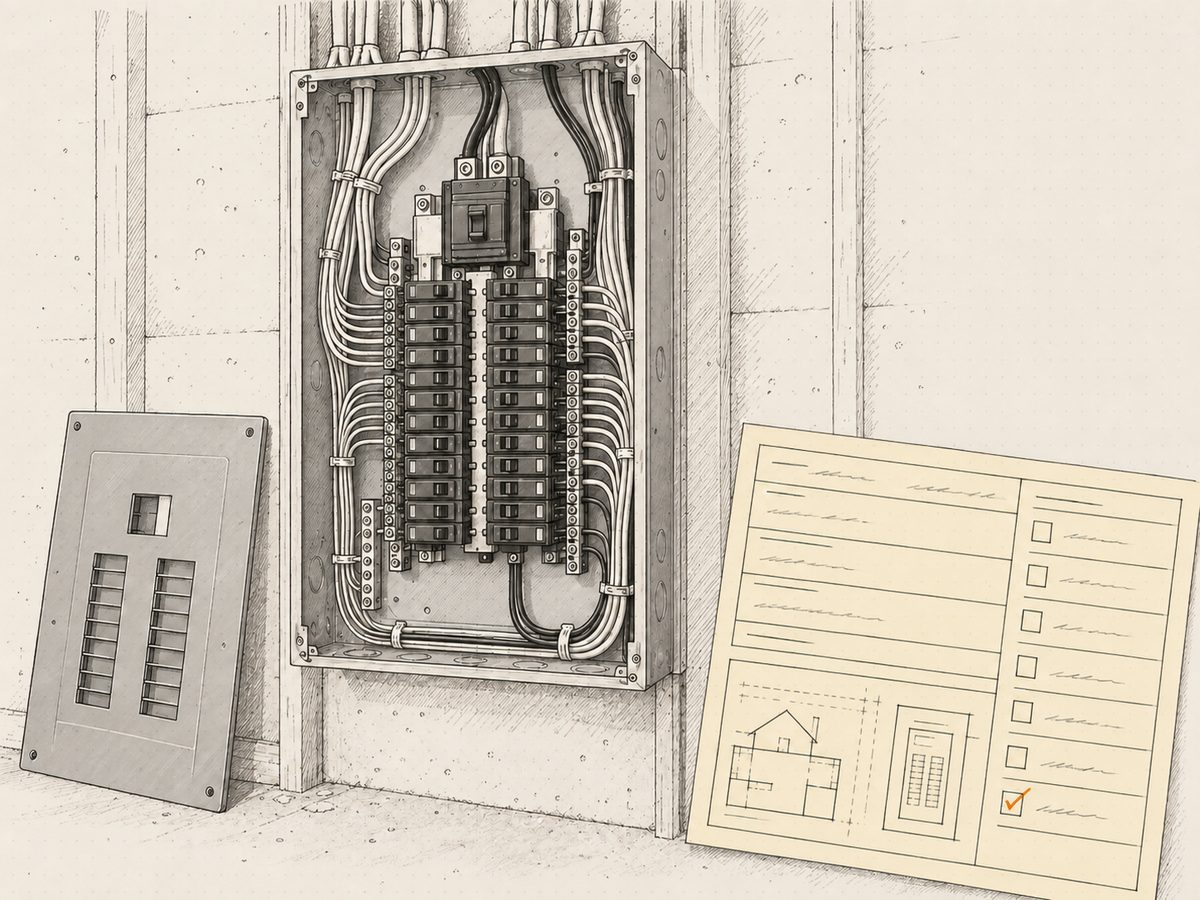
Permits pulled and inspections booked as soon as the job is sold. Estimates drafted from the plans for your estimator to finish. Certified payroll reports for prevailing-wage jobs built from the timesheets.
Roofing
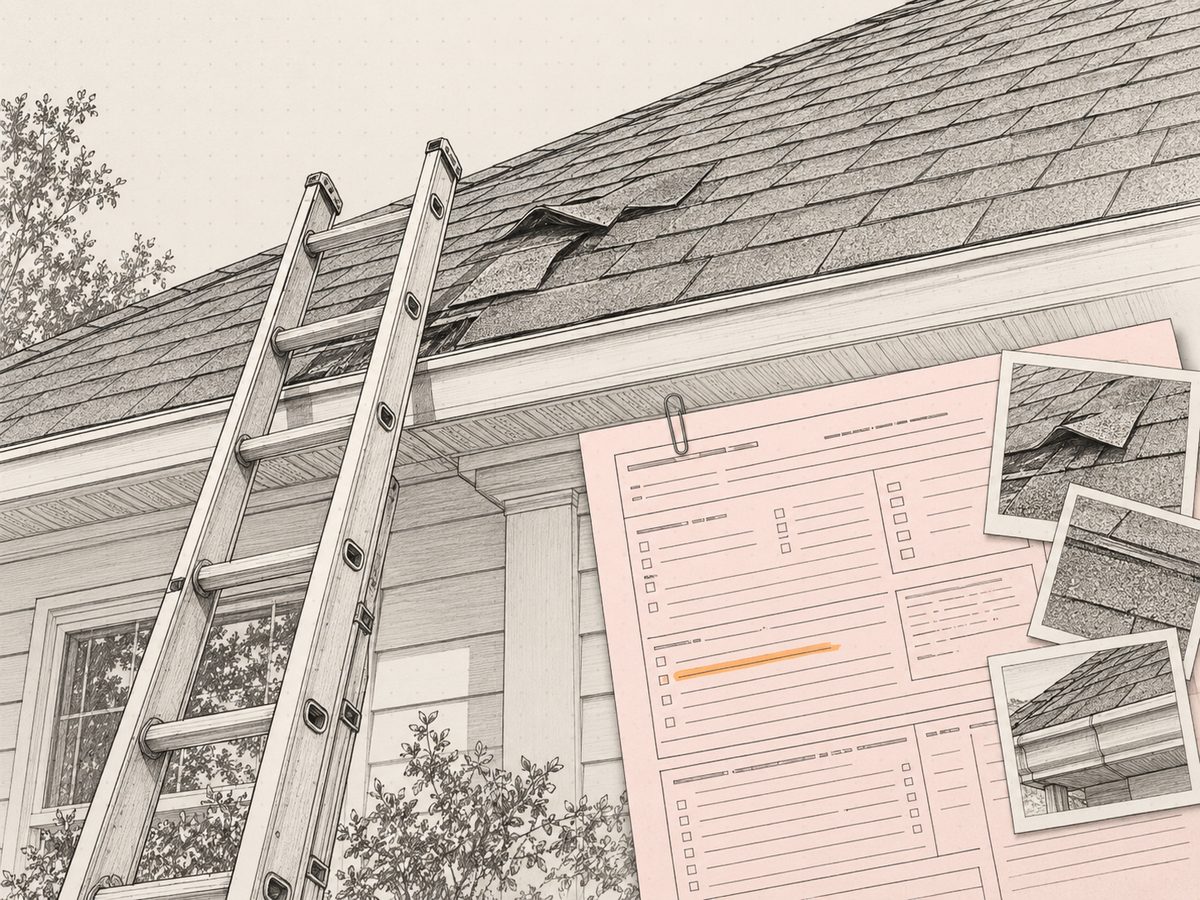
Permit applications and inspection cards tracked on every job. Insurance claims assembled the way the carrier wants them: photos, scope and supplement requests in one packet, and the released depreciation chased until the final check arrives. Progress billing on commercial jobs, on the AIA G702 and G703 forms, built from the schedule of values with retainage tracked.
Swipe for each trade
Your softwareServiceTitan, Housecall Pro, Jobber, QuickBooks. Keep it, fix it, add to it or leave it. We build all four.
You pay for a platform every month and use part of it. The answer is rarely one more module. We look at what you pay for, what your people use and what the job needs, and then we do one of four things.
Set up what you own
The pricebook, the memberships, the reporting and the QuickBooks connection you already pay for, configured and working, with your office trained on them.
Build beside it
What your platform does not do, we build to read from it and write back to it. The board and the books stay the one place your people look.
Move you off it
When the bill has outgrown the value, we move your customers, job history, photos, signed work orders, pricebook and memberships to the new platform, and count every record out of the old one and into the new.
Build the piece that should be yours
Some shops now build their own tools with AI instead of renting another add-on. We build them to run every day: tested on your own jobs, documented, and owned by you, including the code.
The licence is only half the cost of a switch. The other half is rebuilding your pricebook, your memberships, your dispatch rules and years of job history. We put both halves in front of you before you decide.
Running on paper tickets and QuickBooks? Then the first build reads the paper.
Our own system has found, read and scored 1,588 home-service companies across 23 metro areas: the software each one runs, what it promises on response time, how far along its automation is. Point the same system at property managers and builders in your area and it brings your office a ranked list of commercial accounts worth calling.
One of ours · Step 22
A scanned form read in about 23 seconds
A build of ours reads a scanned accident report into a law office’s case software in about 23 seconds, with a rating on every field for how sure it is. By hand the same intake takes 30 to 60 minutes. A tech’s ticket is the same kind of document, and we read it the same way.
One of ours · Every step12345
A firm that runs on what it sells
Our own research, marketing, lead generation and delivery run on teams of agents we built. Our founder held the profit and loss for a business unit of about $3B at a Fortune 250 enterprise before he built systems for owner-run companies, which is why cash and margin sit at the centre of what we build for a shop.
“We already pay for a platform. Why isn’t that enough?”
A platform holds the job. Someone in your office still chases the missing part number, catches the invoice that disagrees with the estimate, and works out which job type lost money. We start with what your platform can do, switch on what you are paying for, and build the rest around it.
“My techs won’t learn another app.”
They will not have to. Nothing new goes on their phones and nothing tracks them. When a ticket is missing something, the question reaches them as a text.
“We bought software before, and it just sat there.”
That happens when your people have to change how they work to fit the tool, and the vendor is gone after the sale. We study how a job moves through your shop first and build around that. We run the build beside your current way until it is right, train your office on it, and keep watch for 60 days after hand-over.
“Couldn’t I build this myself with AI?”
Some owners do, and it works. The hard part comes after the first weekend: testing it on a few hundred of your real tickets, handling the ones that do not fit, keeping it running when your platform changes a screen, and writing it down so it outlasts the person who built it. That is the job we do.
“We run Housecall Pro. Does this work with it?”
Yes, and with ServiceTitan, Jobber, FieldEdge, Service Fusion and Workiz. We connect through the platform’s own data connection where it offers one, through its exports where it does not, and through its screens when that is the only way in.
“What does it cost?”
Every project is priced against a number from your own shop: the office hours it takes back, the cash it brings in sooner, or the hire you would otherwise make. The Proof Sprint is a short, paid first phase, and it ends with a build working on your own jobs before you commit to the rest.
“I don’t have time for this in busy season.”
We do the building. Your part is showing us how a job moves today, answering questions as they come up, and saying yes before anything goes live.
“Who fixes it after you’re gone?”
We hand it over working, with a written record of how a job ran before and how it runs now. We keep watch for 60 days. You own all of it, including the code.
Find out where your shop is losing hours and money.
Get your Operations X-ray, our free first look at your operation. Or book a call and walk us through one job.